
Updated with additional insights, expanded market-reaction and analyst commentary
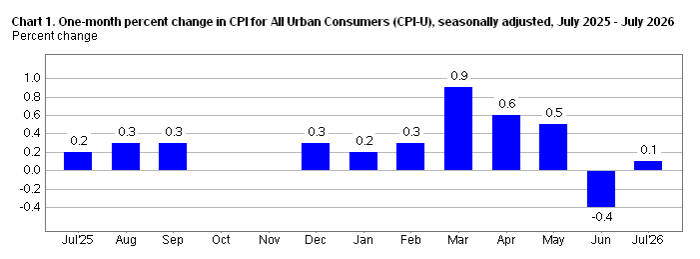
Consumer price inflation (CPI) for July rose in line with expectations, , a Bureau of Labor Statistics (BLS) report released Wednesday showed. The financial markets took the data in their stride, with the initial reaction being muted.
The Nasdaq E-mini futures (NQ), which is more sensitive to the inflation report via the rate channel, added to their gains, last seen up over 1%. The index also benefited from positive reaction to earnings from artificial intelligence (AI) infrastructure companies such as CoreWeave and Nebius.
The U.S. Dollar Index (DXY) came under some pressure, although holding around 99.70 levels, and the 10Y T-note yield slipped 2.2 basis points to 4.6620%, and that of the 2Y moved down a steeper 4.2 bps to 4.176%.
Breaking Down the Headline Numbers
CPI & Core CPI Vs. Consensus
| July Actuals | Consensus | June Reading | |
|---|---|---|---|
| CPI (MoM) | +0.1% | +0.1% | -0.4% |
| Core CPI (MoM) | +0.2% | +0.2% | 0.0% |
| CPI (YoY) | +2.5% | +2.5% | +2.6% |
| Core CPI (YoY) | +3.4% | +3.4% | +3.5% |
Source: BLS
How Inner Details Look Like
- Food priced decelerated month over month (MoM) as food away from home saw a slight deflation.
- Energy prices reaccelerated following a tick down in June. (WTI futures jumped nearly 22% in July following a more than 30% plunge in June)
- Within core goods, new vehicle, used car & truck, and apparel prices grew at a faster pace in July than in the previous month, but medical care commodity prices fell 0.6%.
- Shelter prices rose at a steady (+0.1%) monthly pace as as rents of primary residence and owners’ equivalent rent of primary residence both rose 0.3%.
- Medical care services prices also accelerated (+0.6% Vs. -0.1%)
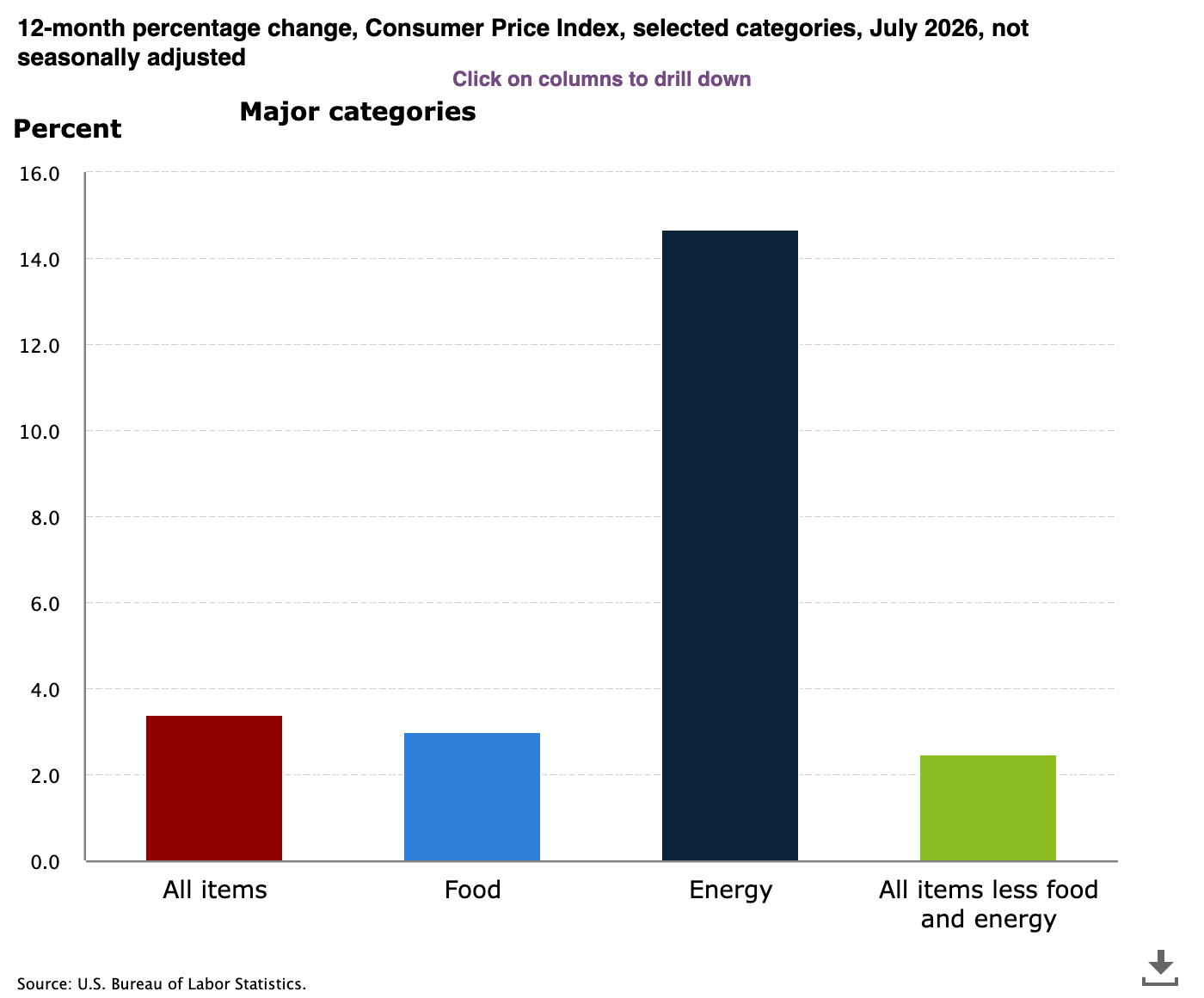
Energy Provides Thrust to Annual Rate
The year-over-year (YoY) increase was the steepest for energy commodities (+14.7%), with gasoline and fuel oil advancing about 25% YoY.
Source: BLS
The odds of a rate hike in September dropped following last Friday's non-farm payrolls report, with futures traders now seeing roughly 44% possibility of a quarter-point hike at the meeting.
Read-Across for Rates
Northlight Asset Management's Chris Zaccarelli said the unsurprising CPI report and the recent anemic job report gives the Fed more time to wait. That said, inflation worries will persist, he said.
The market and the Fed won’t stop worrying about inflation, and there are another set of reports before the next Fed meeting, but these two reports (Jobs and CPI) are going to go a long way toward keeping the bulls running in the near term.
LPL Chief Economist Jeffrey Roach the annual inflation, though having cooled, is still too high. He, however, acknowledged the direction is good. Weighing in on his expectations concerning the September Federal Open Market Committee (FOMC) meeting, the economist said he expects the debate at the September FOMC meeting to be lively as the economy experiences a tight labor market while the inflation picture is quite blurry.
Our baseline is the Fed holds rates steady, but an increasing number of voting members are hawkish and could convince the majority to implement a hike. Overall risk sentiment is positive as inflation is expected to improve by the end of the year.
Ahead of the CPI print, Matt Maley, chief market strategist at Miller Tabak + Co. said in exclusive comments to MarketFramework that the market may be underestimating the inflation risk facing the Fed
In his view, the recent Fed rhetoric has increasingly emphasized the fact that inflation has remained above target for too long. If inflation fails to move convincingly toward 2%, he believes policymakers could be more willing to tolerate weakness in the labor market rather than ease policy aggressively.

